


Mammals
The animals of the Osa Peninsula are one of the most captivating aspects of this destination. From 4 different species of monkeys, to big cats and coatimundis, you can really start to feel like you're in a zoo here in Naturaleza Y Gracia.
We take great enjoyment from having the privilege to watch these exotic animals interacting in their own natural habitat here on the property. Always keep your eye out and a camera on hand when you are strolling the grounds, you never know what you will spot!
The White-nosed Coati
Nasua narica
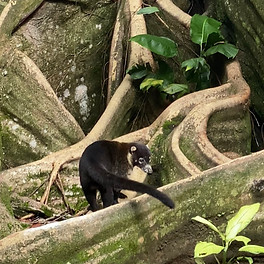
The white-nosed coati is a type of coatimundi native to the Americas with habitats ranging from Arizona to Argentina. Here in Costa Rica the coati or pizote, as it gets referred to by locals, is a common furry animal we get to see roaming the grounds of Naturaleza Y Gracia.
Here the coatis can be found traveling in big packs or manadas. Or you may get the chance to spot a lone-coati which has taken to living off on its own. We do have one resident coati in Naturaleza Y Gracia that lives back behind the pool near Casa Selva. You may spot the coati roaming around near the front of the property on any given day. These animals are not agressive toward humans, but please do not try to feed the coati, or any other animal, under any circumstance. No matter how cute they might look!
Conservation status: Least concern but decreasing population
Black-handed Spider Monkey
Ateles geoffroyi
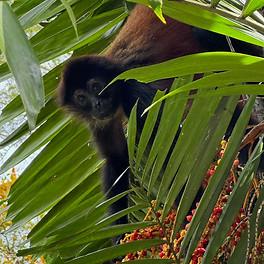
The spider monkey is one of the most common of the four monkey species you can spot in the trees of Naturaleza Y Gracia. The spider monkeys have a vegetarian and insect diet meaning their food mostly consists of palm fruits, leaves, and other fruits such as mangos. They can even be found munching on a beautiful pink hibiscus flower from time to time. These monkeys usually travel in groups and you are likely to see mothers with a baby attached to them. The spider monkey is the largest of the four monkey species on the peninsula, spanning up to 63cm or 25in tall.
Conservation status: Endangered (threatened)
The Ocelot
Leopardus pardalis

The ocelot is a beautiful mid-size cat native to the southern US as well as Mexico, Central, and South America. The ocelot can grow up to 40-50cm (20in) at the shoulders and has an average weight of 7-15 kilos or 15-32lbs.
These cats are a highly important predator in the food web. Sadly, their population is declining due to loss of habitat, hunting, traffic accidents, as well as the poaching of these animals for illegal commercialization.
While these cats tend to only come out at night, if you are attentive during the evening or early morning you may be able to spot
Conservation status: Least concern (population decreasing)
The Tapir
Tapiridae

The Tapir is not only the largest mammal out roaming the peninsula, but it is arguably one of the most cherished animals out here as well. Native to Central and South America and some parts of Asia, locals who have had the chance to spot one of these magnificent beings refer to it as having almost an ethereal presence. These beautiful creatures are known to spend a lot of time near rivers or streams, and can even be found strolling down the remote beaches of Corcovado National Park.
The Tapir can grow up to 1.2m tall (3-4ft) and can weigh around 150-300 kilos (330-660lbs)! They are herbivores and their diet consists mostly of fruit, leaves, berries, and aquatic plants.
Conservation status: Varies depending on species and location. Some are considered endangered and all are threatened by loss of habitat